ANSI/ISA-71.04-2013 · ASTM B825
Gaseous corrosion testing for data centres
Copper and silver coupon testing that tells you how fast the air in your facility is corroding electronics, which gases are responsible, and whether your filtration is doing its job.
The failure you will not see on a dashboard
Hydrogen sulfide, sulfur dioxide, nitrogen dioxide and chlorine are present in parts per billion in most Indian city air. At those levels you cannot smell them, and no BMS sensor will alarm. On a circuit board they form copper sulfide and silver sulfide films that grow across the board surface. This is creep corrosion, and it causes intermittent faults and dead components.
Facilities near industrial estates, ports, sewage treatment, landfill or heavy diesel traffic are most exposed. Navi Mumbai has all of these within a few kilometres of its data centre parks, which is why we recommend a baseline test for every new facility and an annual test after that.
How the test works
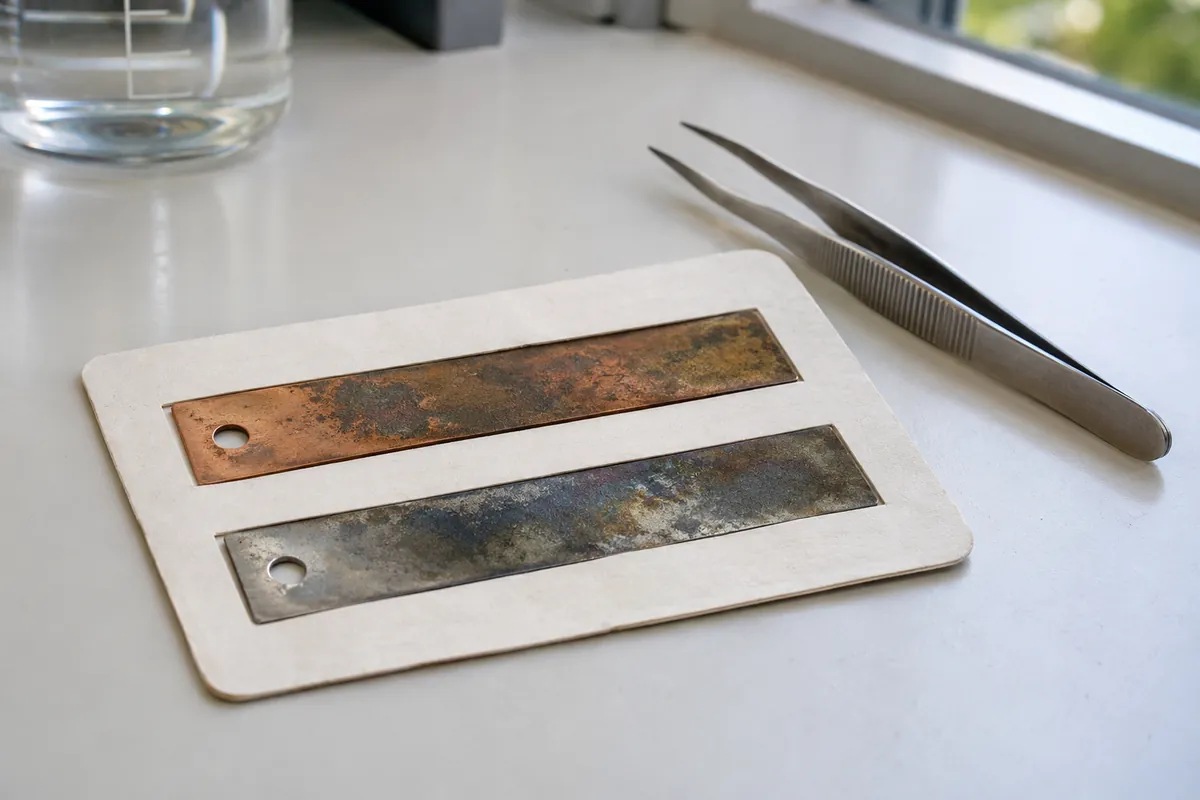
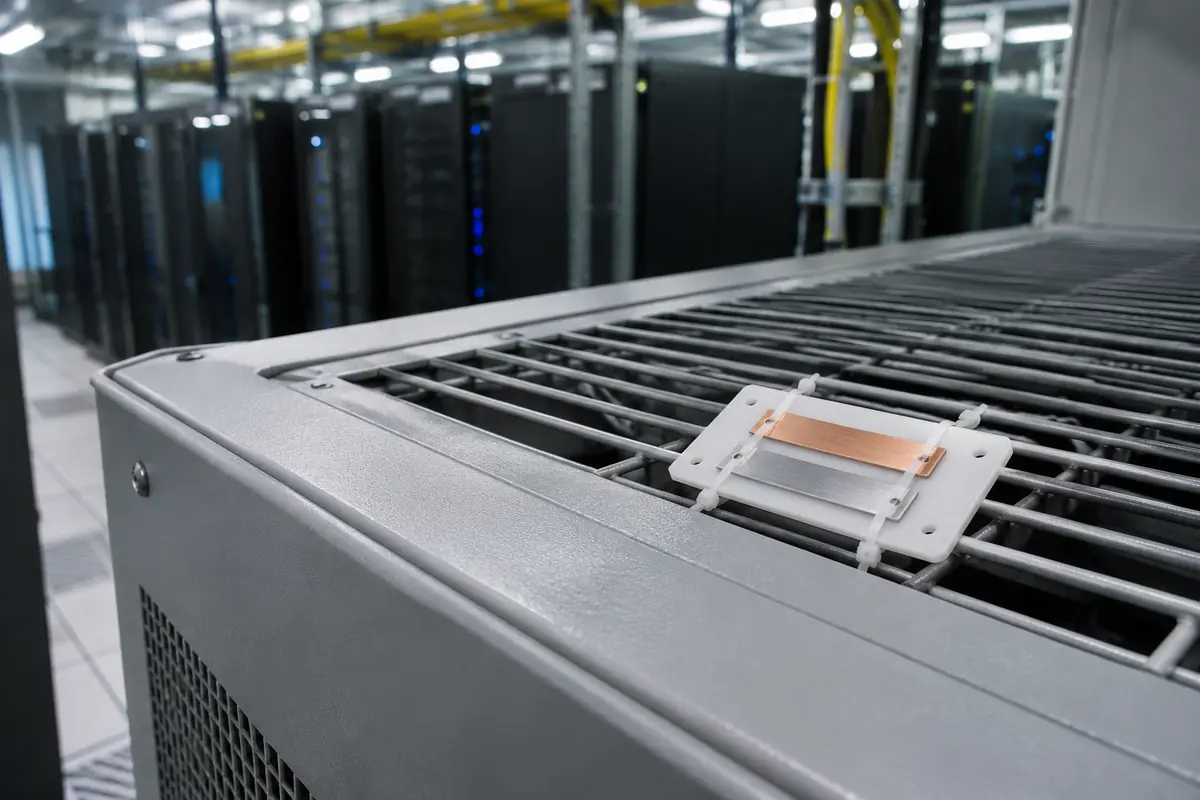
- Sealed corrosion classification coupons (copper and silver strips) are opened and mounted at agreed points with a logged start time.
- After 30 days the coupons are sealed again and returned under chain of custody.
- Film thickness is measured by electrolytic (coulometric) reduction, per ASTM B825. This also splits the film into species, such as copper oxide versus copper sulfide, or silver sulfide versus silver chloride.
- Results are normalised to 30 days and classified to ISA-71.04 severity levels.
ISA-71.04-2013 severity levels
Reactivity rates normalised to a 30-day exposure.
| Severity | Copper (Å / 30 days) | Silver (Å / 30 days) | What it means |
|---|---|---|---|
| G1 Mild | < 300 | < 200 | Corrosion is not a factor in reliability. ASHRAE target for data centres. |
| G2 Moderate | < 1,000 | < 1,000 | Effects are measurable and may affect reliability. Investigate the source. |
| G3 Harsh | < 2,000 | < 2,000 | High likelihood of corrosive attack. Needs chemical filtration or sealing. |
| GX Severe | ≥ 2,000 | ≥ 2,000 | Only specially designed and packaged equipment will survive. |
Source: ANSI/ISA-71.04-2013 and ASHRAE TC 9.9 particulate and gaseous contamination guidelines.
Reading the result correctly
A single number is less useful than the pattern. If outdoor air reads G3 and the data hall reads G1, your filtration is working. If outdoor and indoor are both G2, outside air is getting in unfiltered, often through a leaking envelope, an economiser damper or negative room pressure. If only the battery room is high, look at the room itself.
We also look at the film species. Sulfide points to H₂S or SO₂, typical near STPs, refineries and diesel exhaust. Chloride points to sea air or chlorinated cleaning chemicals. That tells you which filter media to buy.